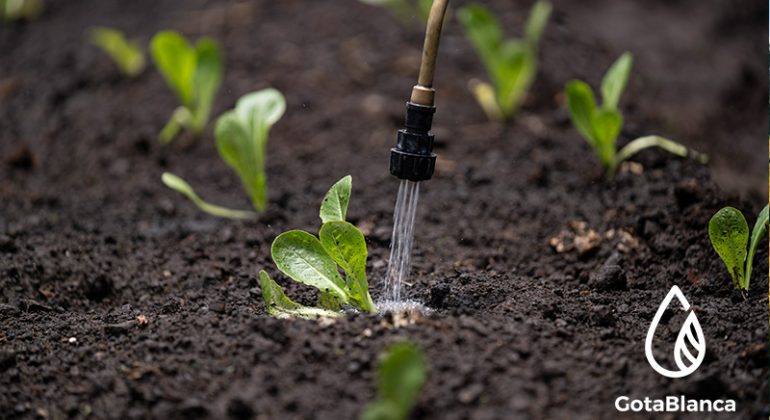

Soil is far more than dirt. It is a complex ecosystem teeming with microscopic life that sustains field fertility, plant health, and, ultimately, the planet's food security. Yet decades of intensive farming have progressively degraded this ecosystem, reducing microbial diversity and weakening the soil's natural ability to recover. Protecting and restoring soil microbiota is, today, one of the most critical challenges facing modern agriculture.
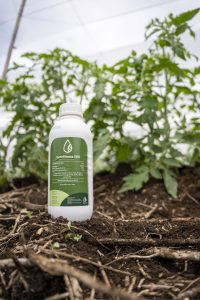
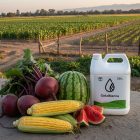
At ClearLeaf, we developed GotaBlanca, an organic-certified, broad-spectrum fungicide and bactericide based on elemental silver. GotaBlanca does not enter plant metabolism, does not generate microbial resistance, and is safe for surrounding ecosystems — it does not affect insects, birds, or any organisms other than fungi and bacteria in direct contact with the product. It is, in short, one of the very few pathogen management products that can coexist with the goals of regenerative agriculture.
One of the questions we hear most often is: can GotaBlanca eliminate soil pathogens while leaving beneficial microorganisms untouched? The honest answer is: not exactly — and it would not be fair to expect that of any product on the market. GotaBlanca is not selective in the sense that it can distinguish between a "good" fungus and a "bad" one. No product truly does. What GotaBlanca does is reduce microbial populations that are present in excess. In a diseased soil, where a pathogen has multiplied aggressively, GotaBlanca can significantly bring down that inoculum, "leveling" populations without fully sterilizing the soil. Microorganisms present in natural, balanced quantities are not meaningfully affected, as we have demonstrated in our field trials.
In January 2026, we completed a soil microbiota analysis on a pineapple crop in Costa Rica, comparing soils treated with GotaBlanca against untreated controls. The results were clear: changes in beneficial microorganism populations were identical across both treatments, confirming that GotaBlanca did not disrupt the beneficial microbiome. Enterobacteria — organisms that can play both beneficial and pathogenic roles — remained at very low levels with no meaningful differences between treatments.
But managing a diseased soil goes beyond reducing inoculum. The key to a truly regenerative strategy lies in what comes next. Our field trials at Cornell University, where we evaluated GotaBlanca across 13 crop-disease combinations, demonstrated that GotaBlanca rotated with biological products is a highly effective approach. In grape trials, for example, the rotation of GotaBlanca with biologicals outperformed grower standards in controlling diseases like black rot and Botrytis. The principle is straightforward: apply GotaBlanca to reduce pathogen load, wait approximately 14 days for the silver to dissipate, and then apply biological inoculants that colonize the soil with beneficial microorganisms. This sequence creates the optimal environment for healthy microbial life to recover.
This is the strategy that makes the most sense both economically and from a regenerative agriculture perspective. It is not about one product solving everything, but about understanding that soil is an ecosystem that needs to be restored, not just treated. GotaBlanca can serve as the first line of defense in diseased soils, and biological products can be the key to their recovery.
Taking care of the soil is not just good agronomic practice. It is an investment in the future of global food production.
 EN
EN  ES
ES